Colds and flu in winter
November 12, 2026
Verwandte Angebote:
How to naturally support your immune system
Temperatures are dropping, the days are getting shorter, and cold season is upon us. Especially in autumn and winter, many people suffer from sore throats, coughs, runny noses, or a full-blown flu.
But why do we get sick more often during the colder months? What role does our immune system play, and what can we do when the first symptoms of a cold appear?
In addition to getting enough sleep, eating a balanced diet, and exercising regularly, traditional home remedies can also help support your well-being.
Why do we get sick more often in winter?
Contrary to popular belief, cold temperatures alone do not cause a cold.
Colds and the flu are caused by viruses. However, during the colder months, we spend more time indoors, where pathogens can spread more easily.
Additionally, dry air and low humidity can impair the natural protective mechanisms of the respiratory tract.
Our immune system therefore has to overcome numerous challenges, especially during the colder months.
What is the difference between a cold and the flu?
Although the terms are often used interchangeably, they are different illnesses.
A cold usually develops gradually and is generally mild.
Typical symptoms include:
- Runny nose
- Sore throat
- Cough
- Fatigue
- Mild headaches
A true flu, also known as influenza, often starts suddenly.
Typical symptoms include:
- High fever
- Severe muscle and joint pain
- Pronounced fatigue
- Headaches
- Dry cough
The flu can be significantly more severe than a common cold. However, it is not always possible to reliably distinguish between the two based on symptoms alone.
How does our immune system work?
Our immune system consists of a complex network of various organs, cells, and chemical messengers.
These include:
- White blood cells
- Lymphocytes
- Macrophages
- Antibodies
- Lymph nodes
- Spleen
- Bone marrow
When pathogens enter our body, various defense mechanisms are activated.
The innate immune system reacts quickly and non-specifically. In contrast, the adaptive immune system can respond specifically to certain pathogens and develop immunological memory.
Which foods support the immune system?
A balanced diet provides the body with essential vitamins, minerals, and other nutrients.
Particularly relevant are:
- Vitamin C for normal immune function
- Vitamin D for the regulation of various immune processes
- Zinc for the function of numerous immune cells
- Protein for the formation and maintenance of the body's own structures
- Iron for various metabolic and immune processes
However, individual foods cannot reliably prevent or cure a viral infection.
A long-term, adequate supply of nutrients is crucial.
Our warming ginger-garlic shot for cold season
When the first signs of a cold appear, many people like to turn to traditional home remedies.
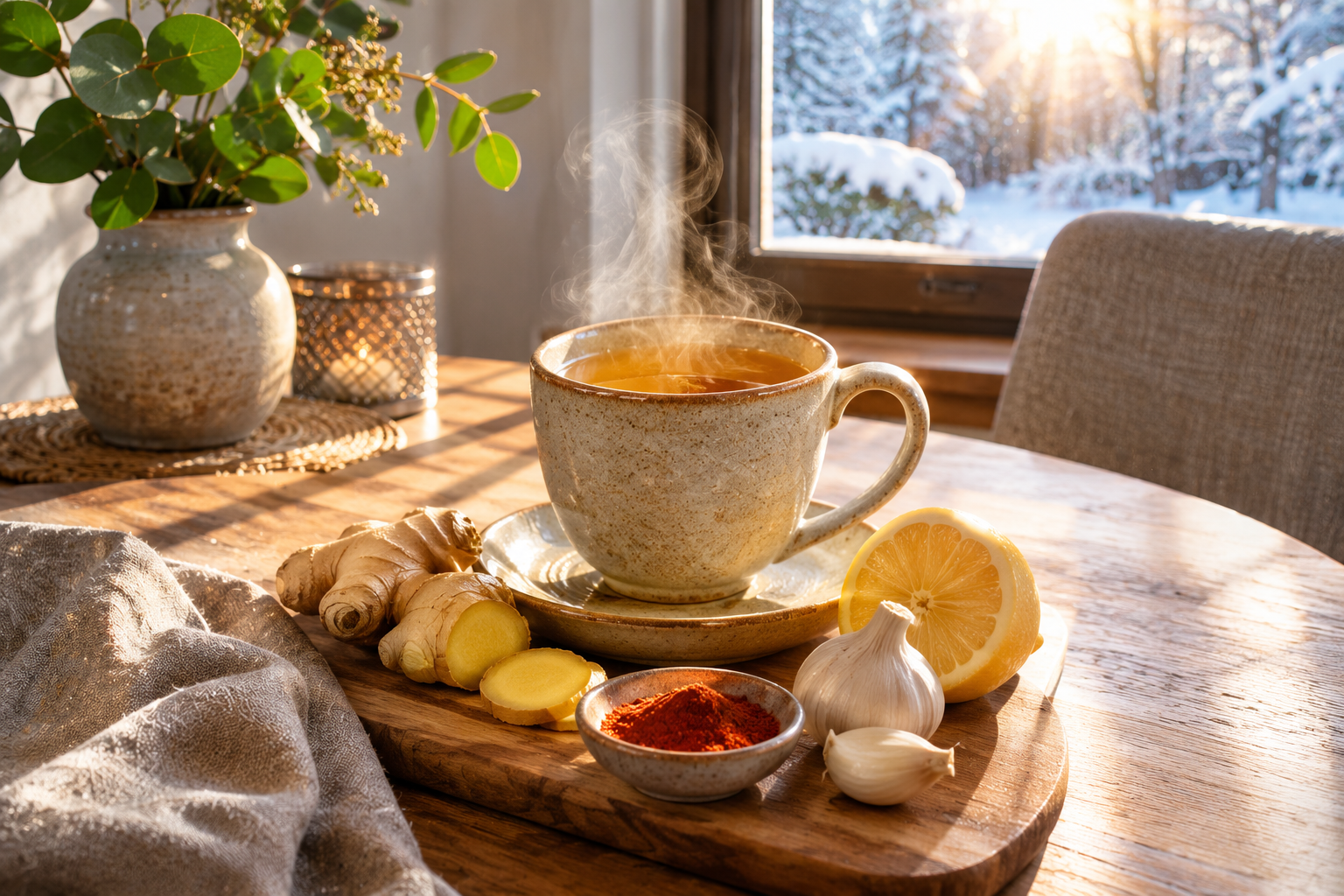
A spicy combination of ginger, garlic, lemon, and cayenne pepper makes for an intense hot drink that can be pleasantly warming, especially on cold days.
Ingredients for one small cup
- 1/4 teaspoon cayenne pepper
- 1/2 teaspoon freshly grated or pressed ginger
- 1 garlic clove, finely pressed
- Juice of half a lemon
- About 100 to 150 ml hot water
Preparation
1. Prepare the ginger and garlic fresh.
2. Place both ingredients in a small cup along with the cayenne pepper.
3. Pour hot, non-boiling water over the mixture.
4. Let it cool down slightly (ideally below 60°C / 140°F).
5. Add the lemon juice, stir well, and enjoy.
If you are sensitive to spicy foods, you should reduce the amount of cayenne pepper or omit it entirely.
Why these ingredients?
Ginger
Ginger contains various bioactive plant compounds, including gingerols and shogaols. These are being studied for their potential anti-inflammatory properties, among other things.
Garlic
When garlic is crushed, it produces compounds such as allicin. In laboratory studies, this substance has shown antimicrobial properties. However, there is insufficient scientific evidence to prove that garlic reliably prevents colds in humans.
Lemon
Lemons provide vitamin C, which contributes to the normal function of the immune system.
Cayenne pepper
Cayenne pepper contains capsaicin, which is responsible for its characteristic heat. It activates specific heat and pain receptors, creating a warming sensation.
Does the shot help with the onset of a cold?
The warm drink can be soothing and helps with fluid intake.
However, there is no convincing clinical evidence that this combination of ingredients can stop a cold from developing or prevent the flu.
The shot is therefore suitable as a complementary home remedy, not as a substitute for medical treatment.
Important note: Essential eucalyptus oil should not be added to this drink. Ingesting it can be harmful to your health.
If you have a sensitive stomach, acid reflux, or food intolerances, cayenne pepper, ginger, and raw garlic in particular may cause discomfort.
How can you prevent a cold or the flu?
The most effective strategy consists of several measures that complement each other.
- Get enough sleep
- Exercise regularly
- Eat a balanced diet
- Wash your hands thoroughly
- Ventilate indoor spaces regularly
- Minimize contact with sick individuals
- Avoid stress and overexertion
- Keep up to date with recommended vaccinations
The seasonal flu shot is an important measure for reducing the risk of influenza and, in particular, severe illness.
Should you exercise when you have a cold?
If you have a mild cold without a fever, light exercise may be possible depending on how you feel.
However, intense strength training, HIIT, or demanding endurance sessions should be avoided during an acute infection.
You should definitely take a break from training if you have the following symptoms:
- Fever
- Severe fatigue
- Body aches
- Persistent cough
- Significantly reduced general well-being
Training intensely while suffering from a serious infection can lead to complications. You should seek medical attention if you experience chest pain, shortness of breath, or a racing heart.
Why are sleep and recovery so important?
During sleep, numerous processes essential for our health and immune function are regulated.
Persistent sleep deprivation can impair the immune system.
Chronic stress can also influence various immune processes through the nervous system and hormonal regulatory mechanisms.
That is why sleep, rest, and a balanced ratio of exertion to recovery are part of a healthy lifestyle.
Conclusion – Staying healthy through the cold season
Colds and flu cannot always be prevented. However, with a balanced diet, sufficient sleep, regular exercise, and sensible hygiene measures, we can create important foundations for our health.
Natural home remedies like our warming ginger-garlic shot can support well-being, but they are not a scientifically proven treatment or prevention for influenza.
At M&G Coaching in Zug, we take a holistic approach to health. Through individually tailored personal training, medical massage, and health-oriented coaching, we help our clients promote physical performance, recovery, and long-term well-being.