.png)


Intermittent Fasting and Autophagy?
August 6, 2026
Verwandte Angebote:
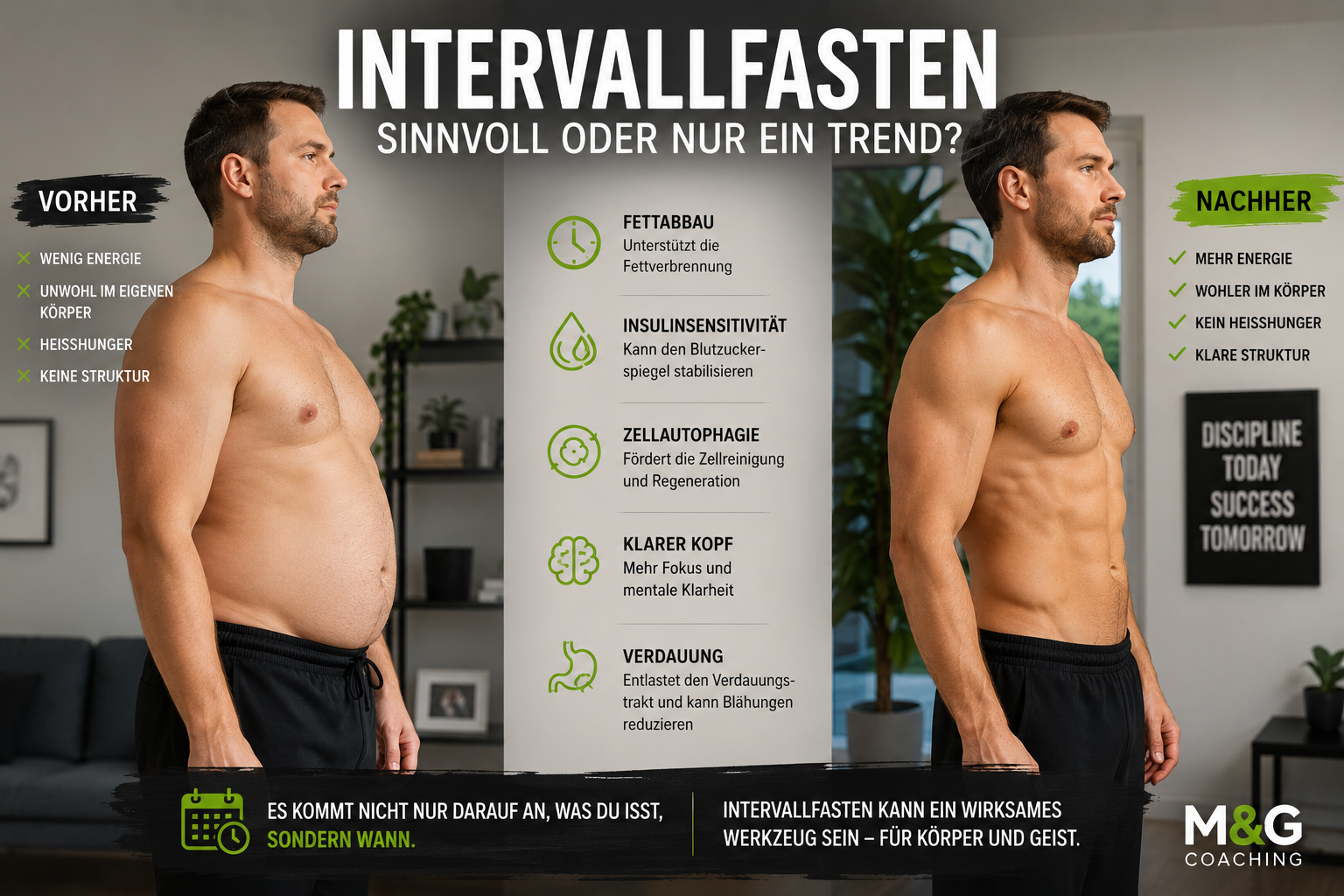
Intermittent Fasting: Beneficial or Just a Trend?
Intermittent fasting has been one of the most popular eating patterns worldwide for years. Whether it's the 16:8 method, the 5:2 diet, or longer fasting periods, many people report weight loss, increased energy, and improved health.
But is intermittent fasting actually beneficial, or is it merely a temporary trend?
The answer is: It depends.
What is Intermittent Fasting?
Intermittent fasting is not primarily about what is eaten, but when it is eaten.
The best-known method is the so-called 16:8 fasting:
- 16 hours of fasting
- 8-hour eating window
An example:
- First meal at 12:00 PM
- Last meal at 8:00 PM
During the fasting phase, the following are generally allowed:
- Water
- Unsweetened tea
- black coffee
How does intermittent fasting work?
During longer eating breaks, insulin levels drop. This allows the body to increasingly access stored energy reserves.
After several hours without food, the body increasingly begins to:
- mobilize fat reserves
- stabilize blood sugar
- adapt metabolic processes
Another term often associated with fasting is autophagy.
What is autophagy?
Autophagy, simply translated, means "self-cleaning of cells."
Damaged cell components and old proteins are broken down and recycled in this process.
This mechanism became particularly well-known through the research of Nobel laureate Yoshinori Ohsumi.
Autophagy is a natural bodily process and is activated, among other things, by fasting.
However, the extent to which it is actually activated during classic 16:8 intermittent fasting has not yet been fully clarified scientifically.
Does intermittent fasting help with weight loss?
Many people successfully lose weight with intermittent fasting.
However, the main reason is usually not the fasting itself, but the reduced calorie intake.
Those who eat fewer hours a day often automatically consume fewer calories.
What remains crucial is:
- Calorie balance
- Food choices
- Exercise
- Sleep
- Stress management
Without a calorie deficit, no fat loss will occur, even with intermittent fasting.
What are the potential benefits of intermittent fasting?
Possible benefits include:
- easy to implement
- less snacking
- more stable blood sugar
- improved insulin sensitivity
- support for weight management
Many people also report:
- more energy
- improved concentration
- reduced hunger
Are there any downsides?
Intermittent fasting isn't for everyone.
Possible downsides:
- Initial hunger
- Reduced performance during training
- Difficulties in social situations
- Insufficient protein intake
Athletes, in particular, should ensure adequate protein and nutrient intake.
Is intermittent fasting beneficial for athletes?
Yes, but not always.
For people aiming for fat loss, however, intermittent fasting can be a helpful tool.
Ultimately, it's not the method that counts, but its long-term sustainability.
The best diet is the one you can stick to long-term.
Intermittent Fasting and Training
Many people train fasted in the morning.
This can work well at moderate intensity.
For intense sessions such as:
- Strength training
- Interval training
- long endurance sessions
however, targeted nutrient intake can improve performance.
An individual assessment is beneficial here.
Conclusion: Beneficial or just a trend?
Intermittent fasting is neither a miracle cure nor merely a trend.
For many people, it can be a simple and effective tool for weight management and structuring their diet.
However, the overall picture of nutrition, exercise, sleep, and recovery always remains crucial.
Every person reacts differently to various dietary forms. That's why at M&G Coaching in Zug, each client receives individual support and a tailored nutrition and training concept that is optimally aligned with their personal goals and daily life.