.png)


Muscle soreness: what is it and what can you do about it?
August 6, 2026
Verwandte Angebote:
Muscle soreness! Is it really a sign of a good workout?
Almost everyone has experienced it: the day after a workout, your muscles ache when climbing stairs, sitting down, or even lifting your arms. Many people therefore believe that muscle soreness is proof of an effective workout.
But is that really true?
The answer is no.
Muscle soreness can occur after a good workout, but it is not a reliable indicator of whether your training was successful.
What is muscle soreness?
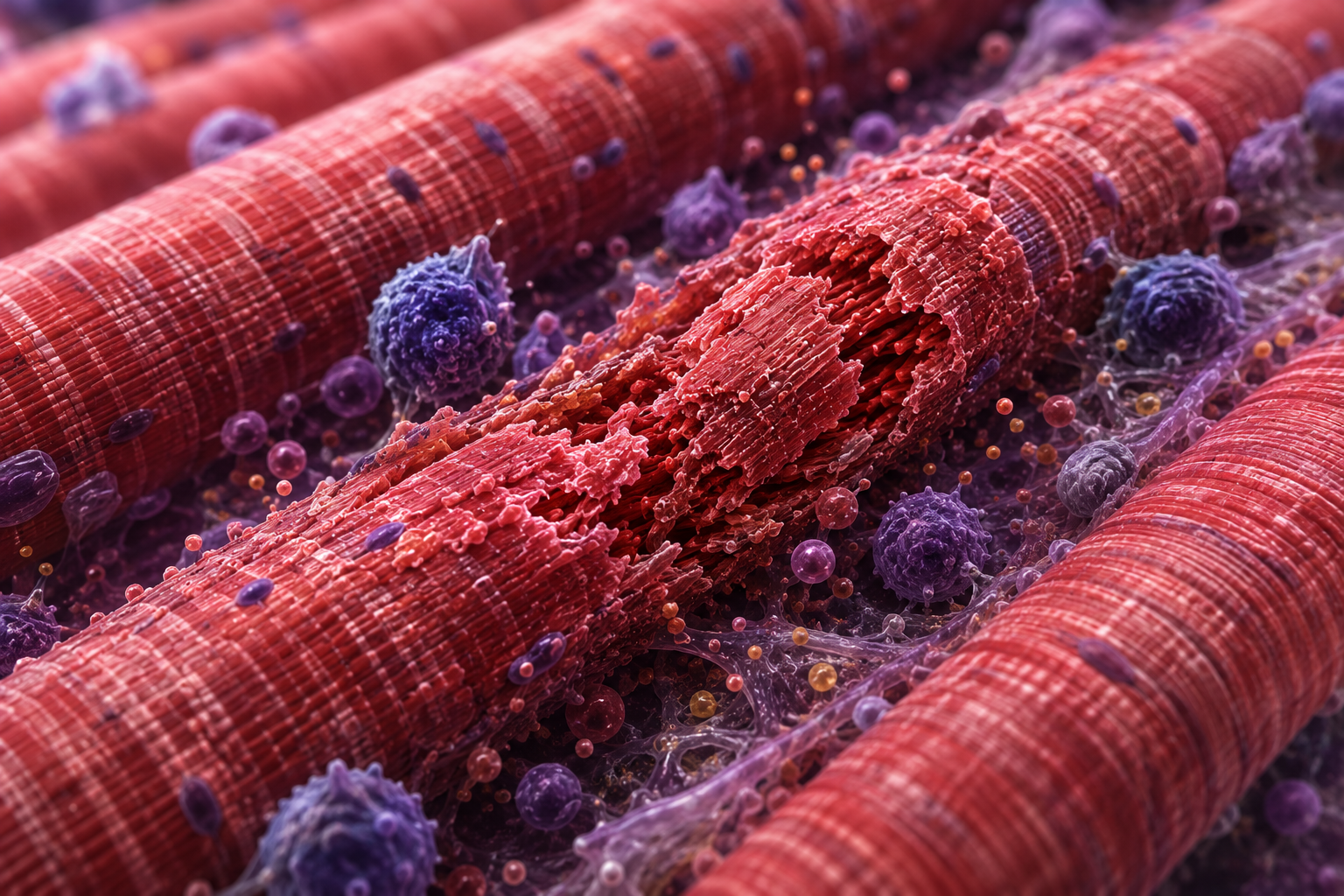
Muscle soreness is caused by tiny tears in the muscle fibers and surrounding tissue. Unaccustomed or very intense physical exertion is particularly likely to cause this microscopic damage.
The result is an inflammatory response from the body.
Typical symptoms include:
- Tenderness to the touch
- Pain during movement
- Feeling of stiffness
- Reduced strength
The discomfort usually appears 12 to 48 hours after training and disappears within a few days.
Why does muscle soreness occur?
Muscle soreness often occurs when:
- you try a new sport
- significantly increase your training intensity
- perform new exercises
- train with eccentric movements (e.g., slow lowering during squats or pull-ups)
The more unfamiliar the strain, the higher the risk of muscle soreness.
Is muscle soreness necessary for muscle growth?
No.
Muscle growth is primarily achieved through regular training stimuli and subsequent recovery.
Many experienced athletes build muscle consistently even though they rarely experience muscle soreness anymore.
What matters is:
- progressive training overload
- sufficient protein intake
- enough sleep
- consistent training
Therefore, muscle soreness is not a benchmark for training success.
Should I train despite having muscle soreness?
That depends on the intensity.
Mild muscle soreness:
- light movement
- walks
- easy cycling
- mobility training
can boost circulation and feel good.
However, if you have severe muscle soreness, you should give the affected muscles time to recover.
What helps with muscle soreness?
Recovery can be supported by:
- getting enough sleep
- staying hydrated
- a protein-rich diet
- light movement
- medical massage
- gentle stretching
- heat, if it feels comfortable
There is no miracle cure, however. The body needs time to repair muscle tissue.
Can a massage help?
Yes.
Medical massage can:
- improve circulation
- reduce muscle tension
- enhance well-being
- support recovery
While it does not accelerate the healing of the muscle fibers themselves, it can help your muscles feel loose and flexible again more quickly.
How can you prevent sore muscles?
It is impossible to avoid muscle soreness completely.
However, you can reduce the risk by:
- gradually increasing training intensity
- performing exercises with proper form
- training regularly
- warming up sufficiently
- allowing for enough recovery time
Consistent training helps you build better tolerance to physical stress over time.
Conclusion
Muscle soreness is not proof of a successful workout, nor is it a requirement for muscle growth.
Regular training, good technique, sufficient recovery, and a balanced diet are far more important.
If you want to keep your body healthy, capable, and pain-free in the long term, you shouldn't chase muscle soreness, but rather focus on a sustainable training structure.
At M&G Coaching in Zug, we guide you with a training and health plan tailored specifically to you. Whether your goal is muscle building, fat loss, rehabilitation, or performance enhancement, we support you in reaching your goals safely and sustainably.