Stress and cortisol
October 22, 2026
Verwandte Angebote:
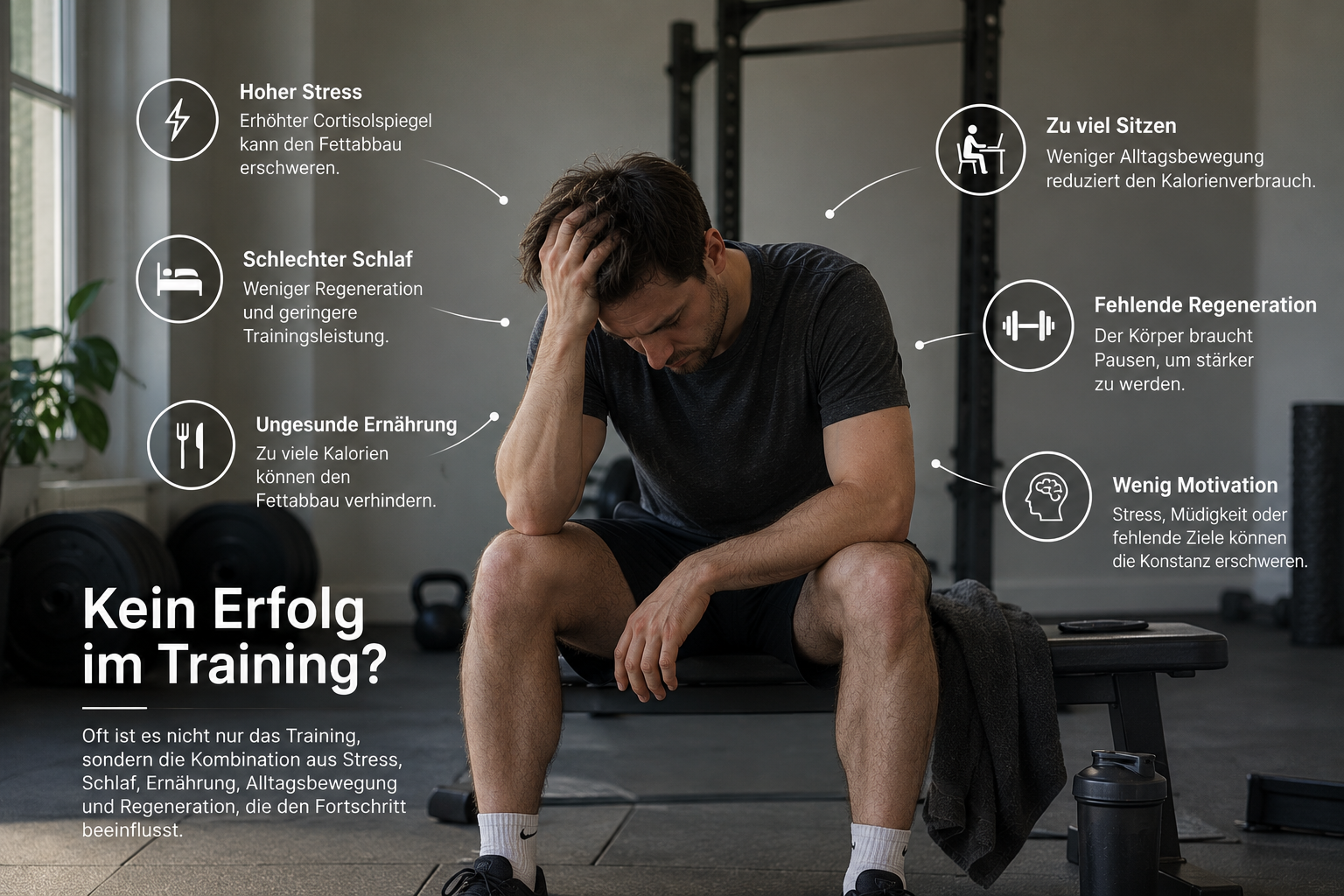
Stress and Cortisol – Why you aren't losing weight despite working out
You work out regularly, watch your diet, and try to live a healthy lifestyle. Yet, the scale barely budges and that stubborn belly fat just won't seem to go away.
Many people are familiar with this problem. But it isn't always due to a lack of exercise or a poor diet.
Stress, lack of sleep, and the hormone cortisol can indirectly affect fat loss.
What is cortisol and what is its function?
Cortisol is a vital hormone produced in the adrenal cortex. It belongs to the group of glucocorticoids and is often referred to as the stress hormone.
Cortisol performs numerous important tasks in the body:
- Regulating blood sugar
- Providing energy
- Influencing metabolism
- Regulating inflammatory responses
- Supporting the natural sleep-wake cycle
Cortisol production is controlled by the hypothalamic-pituitary-adrenal axis.
Physical or psychological stress can cause cortisol levels to rise.
Why can stress make it harder to lose weight?
Chronic stress can affect various processes that are important for successful weight loss.
These include:
- Increased appetite
- Stronger cravings for high-calorie foods
- Poorer sleep quality
- less physical activity in daily life
- reduced motivation to train
- poorer recovery
Stress does not fundamentally prevent fat loss. However, it can make it more difficult to maintain a calorie deficit in the long term.
Does cortisol make you fat and cause belly fat?
Cortisol is often directly associated with belly fat.
In fact, pathologically high cortisol levels, such as in Cushing's syndrome, can lead to increased fat accumulation in the abdominal area.
With everyday stress, however, the connection is more complex.
Not everyone with high stress automatically has elevated cortisol levels or gains weight as a result.
Often, it is changes in eating habits, sleep, and energy expenditure that promote weight gain.
Cortisol alone is therefore not a sufficient explanation for stubborn belly fat.
Why is sleep so important for weight loss?
Those who regularly get too little sleep may have difficulty controlling their body weight.
Sleep deprivation can, among other things:
- increase feelings of hunger
- alter appetite regulation
- impair insulin sensitivity
- reduce training performance
- worsen recovery
For adults, seven to nine hours of sleep per night is generally recommended.
Getting enough sleep supports not only fat loss, but also muscle building and overall performance.
Can too much exercise increase cortisol levels?
Intense training places physical stress on the body.
This causes a temporary spike in cortisol levels. This is a normal physiological response and is not inherently negative.
It can become problematic when high training loads are consistently combined with too little sleep, inadequate nutrition, and a lack of recovery.
Possible consequences include:
- persistent fatigue
- declining training performance
- longer recovery times
- sleep disturbances
- increased irritability
- loss of motivation
Therefore, more training does not automatically mean more fat loss.
How can I reduce stress and support fat loss?
Anyone looking to lose weight sustainably should not focus solely on calories and training sessions.
Your personal lifestyle also plays an important role.
The following measures can help:
- regular strength training
- moderate endurance training
- sufficient sleep
- balanced diet
- daily exercise
- intentional rest breaks
- breathing exercises and relaxation techniques
- yoga or walks in nature
It is particularly important to have a training plan that fits your personal daily routine and individual capacity.
Can medical massage help with stress?
Medical massage can be a useful addition to stress management.
It can help reduce muscle tension, promote relaxation, and improve overall well-being.
People with sedentary jobs or high professional stress in particular often report tension in the neck, shoulder area, and back.
Massage can alleviate such discomfort and support subjective recovery.
However, a permanent reduction in cortisol levels through massage has not been clearly proven by science.
Why am I not losing weight despite exercising and eating healthy?
If your body weight has been stagnant for several weeks, there may be various reasons for this.
For example:
- no actual calorie deficit
- underestimated calorie intake
- too little daily physical activity
- water retention
- lack of sleep
- insufficient recovery
- certain medications or medical conditions
Building muscle can also improve your body composition, even if the scale shows little change.
That is why you should consider not only your weight, but also changes in body measurements and physical performance.
The bottom line: successful weight loss is about more than just training
If you want to reduce body fat in the long term, you shouldn't rely solely on intense training and calorie counting.
Stress management, sleep quality, nutrition, exercise, and recovery all work together to shape our lifestyle and, consequently, our weight loss success.
Cortisol is not an enemy, but a vital hormone. The key is how well your body can handle stress.
Everyone reacts differently to training, nutrition, and stress. That’s why at M&G Coaching in Zug, we develop individual personal training, fat loss, and recovery plans tailored to your physical needs, personal goals, and daily routine.
Our goal is not just short-term weight loss, but a sustainable improvement in your health, fitness, and quality of life.